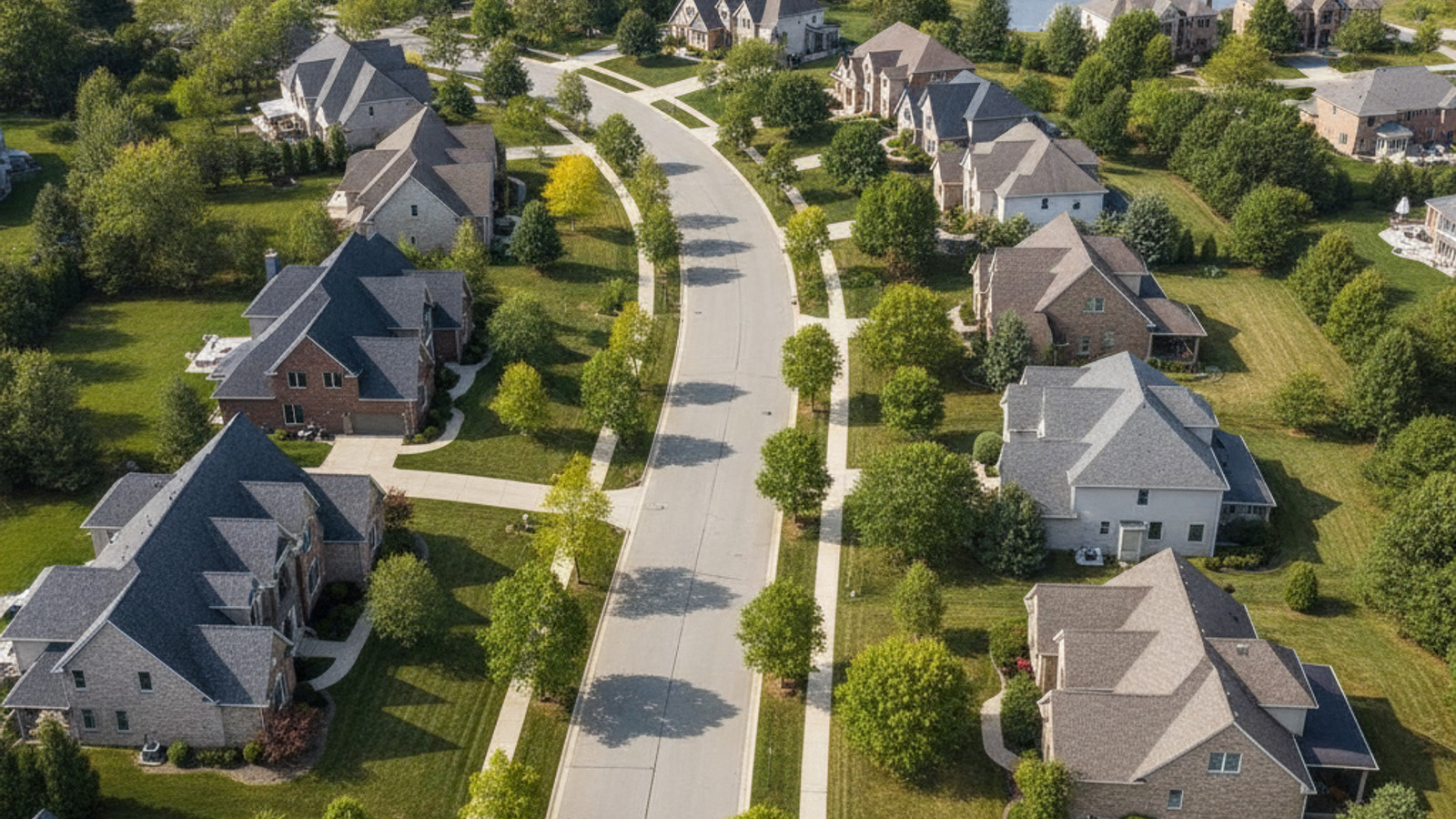
If you are looking to move to Metro Detroit, you have likely narrowed your search down to the two heavyweights of the northern suburbs: Troy and Sterling Heights. On a map, they are right next to each other—sharing a border along Dequindre Road—but the vibe, price point, and lifestyle in each city are distinct.
Troy, located in Oakland County, is often viewed as the corporate, upscale hub. It is known for its “Golden Corridor” of businesses, luxury shopping, and a housing market that commands a premium. On the other side of the border in Macomb County lies Sterling Heights. It has historically been a blue-collar stronghold that has evolved into a dense, thriving residential community known for incredible value and safety.
Choosing between them usually comes down to a balance of budget versus amenities. Are you looking for the prestige and educational accolades of living in Oakland County, or are you looking for the community feel and square footage bang-for-your-buck found in the Macomb County real estate guide? Let’s break down the numbers.
Cost of Living & Housing Market Comparison
The most immediate difference you will notice when browsing listings is the price gap. While both cities offer stable home values, the entry point for Troy is significantly higher than its neighbor to the east.
Buying a Home As of 2026, the median home price in Troy generally hovers between $450,000 and $460,000. It is a competitive market where “entry-level” often means a smaller ranch built in the 1970s that may need updates. Conversely, the median home price in Sterling Heights sits closer to $325,000. For buyers, this is a massive distinction. In Sterling Heights, that $450,000 budget often buys a significantly larger, newer colonial with modern finishes, whereas in Troy, it gets you into the door.
The Rental Market If you aren’t ready to buy, the rental market reflects the same trend. Troy has a high concentration of luxury apartment complexes catering to business executives, often costing $200 to $400 more per month than comparable units in Sterling Heights. If you are looking for Troy homes for sale, be prepared for a higher monthly nut; if you prioritize value, Sterling Heights real estate stretches your dollar further.
Property Taxes: Millage Rates vs. Assessment Values
Property taxes in Michigan can be confusing, and this is where the comparison gets interesting. You might hear that Troy has a “lower tax rate” (millage) than many surrounding cities. This is true because Troy has a massive commercial tax base—anchored by the Somerset Collection and the Big Beaver business corridor—that subsidizes the residential tax burden.
However, a lower rate doesn’t always mean a lower bill. Because homes in Troy are assessed at much higher values than those in Sterling Heights, your actual annual tax payment is likely to be higher in Troy. Sterling Heights offers a balance: reasonable millage rates combined with more moderate home assessments, usually resulting in a lower total cost of ownership.
Schools & Education: Troy School District vs. Utica Community Schools
For many households, the decision between these two cities begins and ends with the school district. This is the primary driver of the price premium in Troy.
Troy School District The Troy School District is consistently ranked in the top 3 to 10 districts in the entire state of Michigan. It holds an A+ rating on Niche and is known for high academic pressure, massive Advanced Placement (AP) offerings, and sending graduates to Ivy League and top-tier universities. If you buy here, you are paying for that reputation.
Utica Community Schools (Sterling Heights) Sterling Heights is primarily served by Utica Community Schools (UCS) and Warren Consolidated. UCS is Michigan’s second-largest school district and is highly regarded, generally holding strong “A” ratings. While it may not have the same elite, pressure-cooker reputation as Troy, it offers incredible resources, including the Gene L. Klida Utica Academy for International Studies.
The trade-off is financial. You might pay $100,000 more for a house in Troy to access the Troy School District. For many, that investment is worth it. For others, the high-quality education in Sterling Heights—without the six-figure housing premium—makes it one of the best school districts in Metro Detroit for value.
Crime Rates & Safety: Which City is Safer?
Safety is a top priority for anyone relocating, and the good news is that both cities are exceptionally safe compared to national averages.
Sterling Heights aggressively and proudly markets itself as the “Safest Big City in Michigan” based on FBI crime statistics for cities with populations over 100,000. The police department is well-funded, and the community is dense and watchful.
Troy is also incredibly safe. While you might see slightly higher property crime statistics in certain reports, it is important to look at the context: Troy has a massive retail footprint. Retail theft at the mall or big-box stores can skew the numbers, but violent crime remains very low. Whether you choose Troy or Sterling Heights, you are moving to an area with low crime statistics and safe streets.
Lifestyle, Shopping & Commute
This is where the “vibe” difference really shows up. Troy feels like a built-up city designed around the car and the office, while Sterling Heights feels like a dense network of neighborhoods designed around the home.
Shopping and Retail Troy is arguably the retail capital of Michigan. It is home to the Somerset Collection, a luxury mall featuring Gucci, Louis Vuitton, and Neiman Marcus. If you want high-end dining and shopping, it is right in your backyard. Sterling Heights relies on the Hall Road (M-59) corridor. It has everything you need—Target, Costco, and casual chain dining—but it is much more utilitarian than luxury.
The Commute If you work in Detroit or the auto industry, commute times matter.
- Troy: I-75 runs right through the middle of the city. You can get to downtown Detroit in about 25 minutes.
- Sterling Heights: You are more reliant on surface streets like Van Dyke or M-59 to get to a highway. Depending on where you live in the city, the commute to Detroit can take 30 to 40 minutes.
Parks and Recreation Sterling Heights shines when it comes to green space. Dodge Park is a crown jewel, featuring an amphitheater, farmers market, and trails along the Clinton River. The city also hosts “Sterlingfest,” one of the area’s biggest summer festivals. Troy has excellent community centers and things to do in Troy, but it is more developed, leaving slightly less room for the sprawling, nature-focused parks in Sterling Heights.
Final Verdict: Who Should Move Where?
Deciding between these two comes down to your personal checklist.
- Choose Troy if: You have a flexible budget and top-tier public schools are your absolute number one priority. It is also the better choice if you work along the I-75 corridor or crave proximity to luxury retail and fine dining.
- Choose Sterling Heights if: You want the most house for your money. If you value a strong “hometown” community feel, excellent parks, and want a very safe, affordable place to maintain a household, this is the spot for you.
If you are still on the fence, the best next step is to drive the neighborhoods in both cities or contact a relocation specialist who can show you comparable homes in each area.
Frequently Asked Questions
Is Troy, MI more expensive than Sterling Heights?
Yes, Troy is generally more expensive. As of 2026, the median home price in Troy is roughly $125,000 to $135,000 higher than in Sterling Heights. You will also typically find higher rental rates in Troy due to its location in Oakland County and its proximity to major corporate headquarters.
Which city has better schools, Troy or Sterling Heights?
Troy School District generally ranks higher in state and national polls (often A+ rated) and is known for rigorous academic standards. However, Sterling Heights is served by Utica Community Schools, which is also a highly-rated, robust district (A rated) that offers excellent specialized academies, offering great education at a lower cost of living.
What is the commute like from Sterling Heights to Detroit compared to Troy?
Troy offers a faster, more direct commute to Detroit because I-75 runs directly through the city, taking about 25 minutes. Commuting from Sterling Heights often requires navigating heavy traffic on Hall Road (M-59) or Van Dyke to reach a highway, which can push the drive time to Detroit closer to 35 or 40 minutes.
Why is Sterling Heights called the safest big city in Michigan?
Sterling Heights frequently receives this title based on FBI Uniform Crime Reporting data for cities with populations over 100,000. It consistently posts the lowest violent crime and property crime rates in the state for a city of its size, a distinction the city actively maintains through strong community policing.