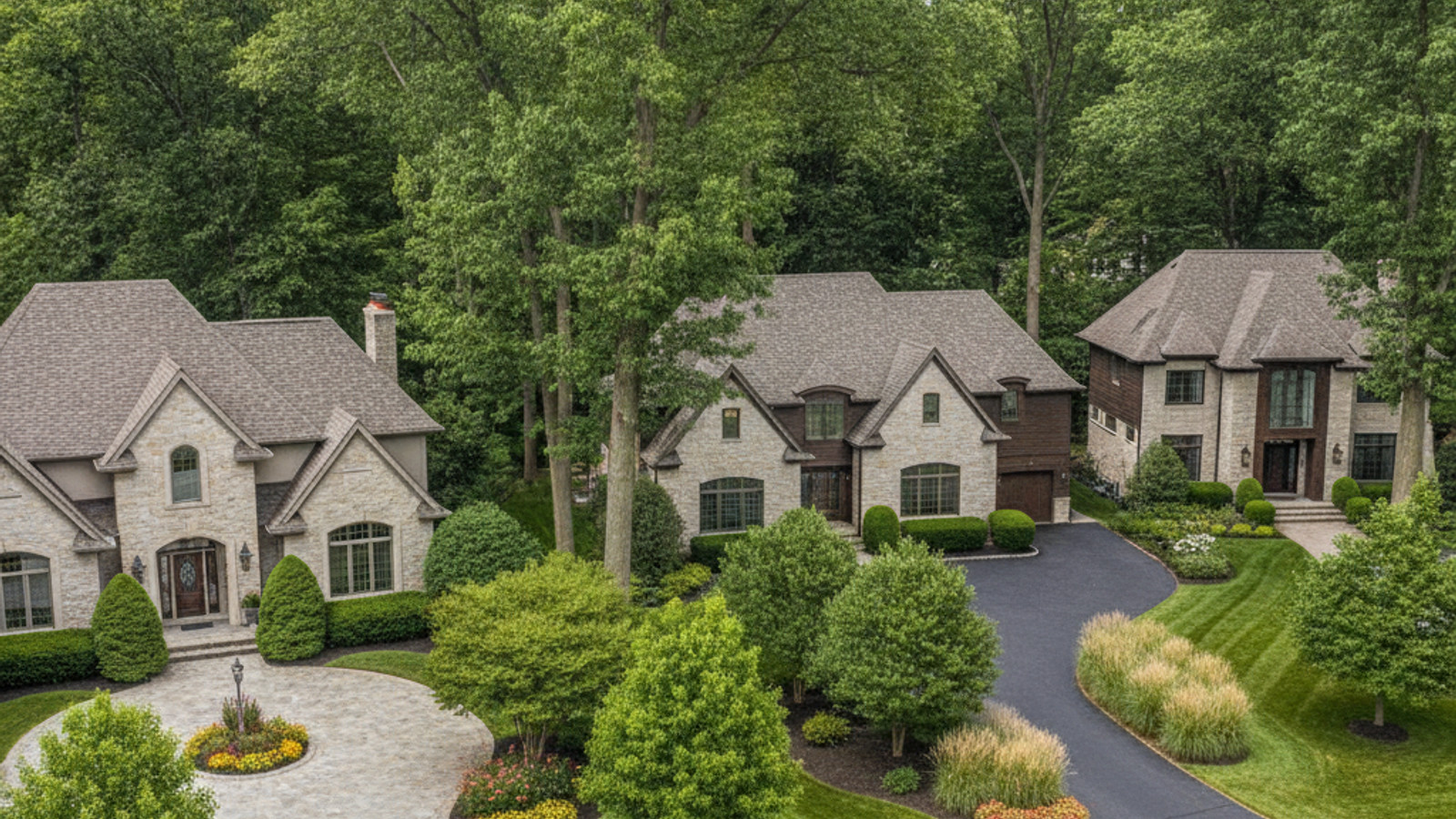
If you are thinking about making a move this year, you’re likely hearing a lot of conflicting noise about the economy. But here on the ground in Oakland County, the story is actually quite positive for sellers. As of February 2026, we are looking at a market that is active, stable, and leaning heavily in your favor.
Whether you are looking to downsize to a condo or trade up for more space, understanding the local numbers is the first step to a profitable sale. Let’s sit down and look at what is actually happening in our local market right now.
Selling Your Home in Rochester Hills: The 2026 Landscape
Let’s get right to the point: We are currently in a strong seller’s market. As we head into late winter and early spring of 2026, inventory remains surprisingly tight. We are seeing approximately 1.8 months of supply, which is technically low. For context, a “balanced” market usually has about six months of supply.
Because there aren’t enough homes to go around, prices have held their ground and then some. The median sale price in Rochester Hills is hovering between $450,000 and $470,000, which is a nice bump of roughly 21% year-over-year compared to early 2025.
What does this mean for you? Speed. Homes that are priced correctly are moving fast—typically averaging 32 to 46 days on the market. We are also seeing a list-to-sale ratio of nearly 98% to 100%. Essentially, sellers who listen to the data are getting their asking price, and often a little more. While the national news might be unpredictable, Oakland County real estate remains a steady ship.
When Is the Best Time to Sell in Rochester Hills?
If you have lived in Michigan for even one winter, you know our seasons dictate everything. Real estate is no different. While you can certainly sell a home in November, the buyer pool changes drastically with the weather.
Right now—late February through May—is what we call the “Spring Swing.” This is generally the prime window to list your home. While sales prices often hit their absolute peak in June, listing in March or April allows you to capture the early momentum of buyers who have been waiting all winter for new inventory to hit the market.
Here is how the calendar usually plays out locally:
- The Spring Rush: Buyers are motivated by tax refunds and the improving weather.
- School Calendar: Many buyers in our area are specifically looking to close and settle in before the new school year begins in Oakland County.
- Winter Sales: Selling in winter is tougher due to curb appeal challenges, but the buyers looking in January and February are usually very serious. You get fewer tire-kickers and more written offers.
Pricing Strategy: The Comparative Market Analysis (CMA)
One of the biggest mistakes I see sellers make is relying on a generic online estimate to price their home. Algorithms are great for general trends, but a “Zestimate” doesn’t know that your subdivision—like North Oaks or a custom build in an older neighborhood—has higher demand than the one across the street. It also doesn’t know you just remodeled the master bath.
This is why we need a professional Comparative Market Analysis (CMA). This isn’t just looking at what your neighbor asked for their house; it’s looking at what they actually got for it.
The danger of overpricing in 2026 is real. Even in a hot seller’s market, buyers are educated. If a home is priced 10% over market value, it tends to sit. And when a home sits, buyers assume something is wrong with it. The smarter strategy is often pricing slightly at or just below market value. This tends to trigger multiple offers, creating a bidding environment that drives the final price up naturally.
Preparing Your Home: Staging and Repairs
You don’t necessarily need to tear out your kitchen to sell, but you do need to present a product that feels “move-in ready.” Buyers right now are paying a premium for convenience; they don’t want to inherit a project list.
Start with the curb appeal. I know it’s Michigan and the weather can be gray, but clearing out winter debris, putting down fresh mulch, and ensuring your exterior lighting is bright can make a massive difference. You want the buyer to fall in love before they even step out of the car.
Inside, focus on the mechanicals and the basement. In our area, a documented, well-serviced HVAC system is a huge selling point. And let’s talk about the “Michigan Basement.” It doesn’t have to be a finished rec room, but it must smell fresh and be dry. If you have waterproofing documentation, have that ready—it adds tangible value.
Beyond that, stick to high-ROI updates. Fresh neutral paint and decluttering offer a much better return on investment than major structural renovations.
Marketing Your Home for Maximum Exposure
Putting a sign in the yard is the bare minimum, but to get top dollar, we need to cast a wider net. Today’s buyers are scrolling through listings on their phones during their lunch breaks. If the photos aren’t professional, they swipe left.
High-definition photography and 3D tours are essential, especially for out-of-state buyers relocating to Oakland County for work. We also want to make sure your home is syndicated correctly across the MLS to appear on major sites like Zillow and Realtor.com, as well as local brokerage sites.
We also lean heavily on local networking. Often, the best marketing happens agent-to-agent. By sharing “Coming Soon” details within the Oakland County agent network, we can sometimes line up showings before the listing even goes public.
Finally, we market the lifestyle, not just the house. Listings should highlight proximity to amenities like downtown Rochester, the Paint Creek Trail, or easy access to M-59 and I-75.
Cost to Sell a Home in Rochester Hills (2026 Breakdown)
I believe in no surprises at the closing table. Many sellers focus on the profit but forget to factor in the closing costs. Generally, you should budget for agent commissions (typically shared between the listing and buyer brokerages) and title insurance, which is usually a seller expense here.
However, the line item that surprises people most is the Transfer Tax. In Michigan, this is a tax paid by the seller to transfer the deed to the new owner.
Here is how the math shakes out:
- State Transfer Tax: $3.75 per $500 of value.
- Oakland County Transfer Tax: $0.55 per $500 of value.
- Total: You are looking at $8.60 for every $1,000 of the sale price.
To put that in perspective, if you sell your home for $450,000, your transfer tax bill will be approximately $3,870. It’s important to factor this into your net sheet so you know exactly what you are walking away with.
Timeline: From Listing to Closing
Once we decide to list, what does the schedule look like? In the current market, things move efficiently.
- Listing Live: We go active. Expect the bulk of your showings and Open Houses to happen in the first 1-2 weeks.
- Receiving Offers: We review contracts. We aren’t just looking at the highest price; we are looking at contingencies, lender strength, and closing dates.
- Acceptance to Closing: This period usually takes 30 to 45 days.
- Hurdles: The inspection and appraisal are the two biggest obstacles. We navigate these by negotiating repairs or appraisal gaps if necessary.
- Occupancy: In Michigan, it is quite common for sellers to negotiate “post-close occupancy,” giving you a few days or weeks after closing to move out without the stress of a same-day move.
Why Work With a Local Rochester Hills Agent?
You might be tempted to try “For Sale By Owner” (FSBO) to save on commission. I get it—equity is hard-earned. But statistics consistently show that agent-assisted sales often net more money, even after paying the commission.
Local agents have access to sold data that FSBOs often miss, ensuring you don’t underprice your home. We also act as a buffer during negotiations. When a buyer’s inspector claims the roof needs replacing, we are there to contextualize that request and protect your bottom line.
Furthermore, Michigan has strict seller disclosure requirements. A professional ensures you are legally compliant, reducing your risk of a lawsuit down the road. If you are curious about what your specific property might command in this market, it might be time to contact an agent to run the numbers.
Frequently Asked Questions
How much are closing costs for sellers in Rochester Hills?
Closing costs vary, but the most significant fixed cost for sellers is the Real Estate Transfer Tax, which totals $8.60 per $1,000 of the sale price. On top of that, you will generally pay for the owner’s title insurance policy, agent commissions, and any prorated property taxes or HOA dues.
How long does it take to sell a house in Rochester Hills right now?
As of early 2026, homes are averaging between 32 and 46 days on the market. This includes the time from listing to accepting an offer. However, highly desirable homes priced accurately often go “pending” in under a week.
Do I need to pay taxes when I sell my house in Michigan?
Yes, you must pay the State and County Transfer Tax at closing regardless of profit. However, this is different from Capital Gains Tax. Many sellers can exclude up to $250,000 (single) or $500,000 (married) of profit from federal capital gains taxes if they have lived in the home for two of the last five years.