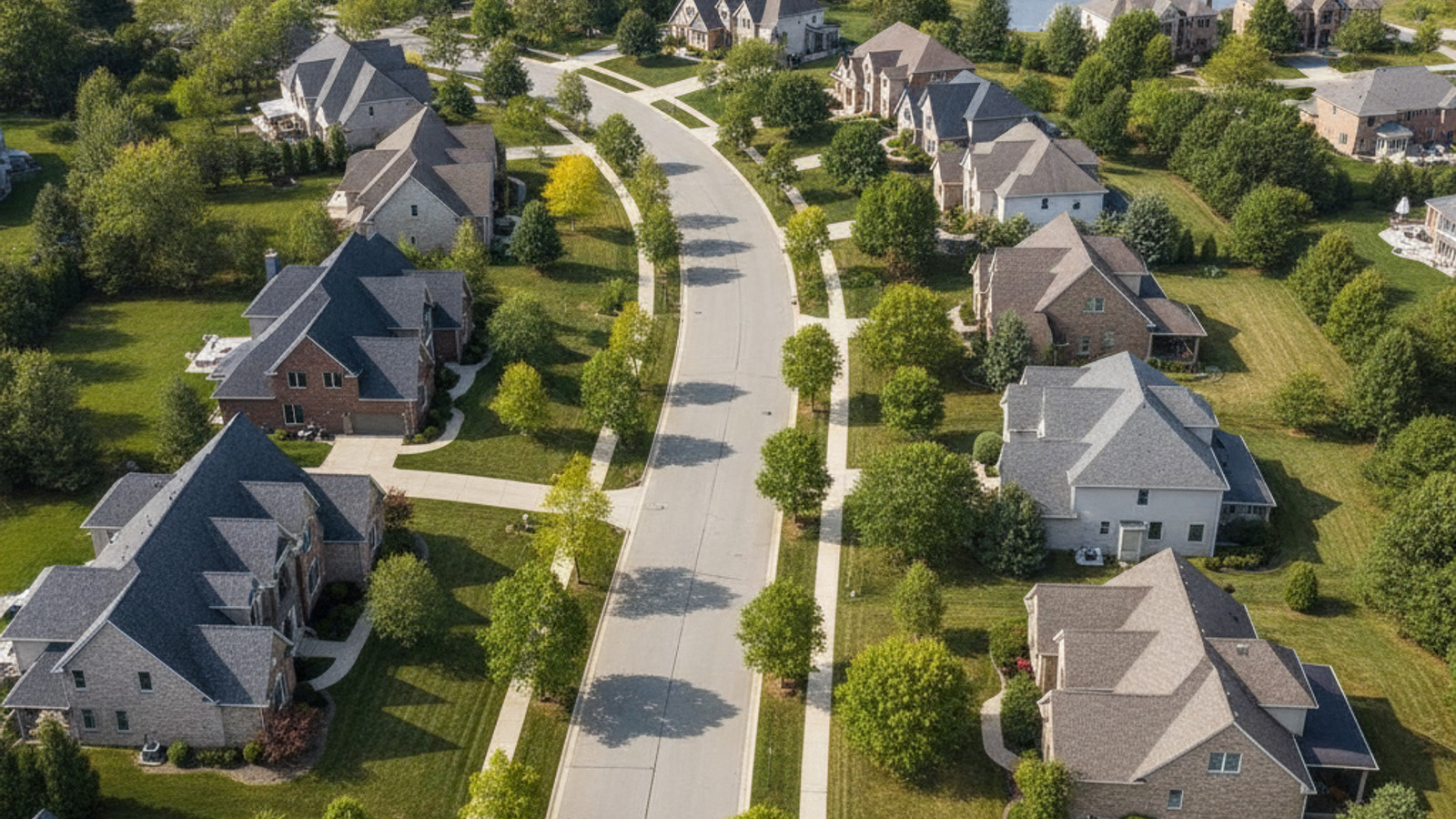
If you are driving north from Rochester Hills and suddenly the four-lane paved boulevard turns into a two-lane gravel road winding through rolling hills, you have likely arrived in Oakland Township. It is one of the few places in Metro Detroit where you can legitimately find horse pastures and Ferraris sharing the same zip code.
This area is distinct from the rest of Oakland County. While neighboring communities have embraced density and commercial development, Oakland Township has spent decades fighting to stay semi-rural. As we move through early 2026, the demand for this kind of privacy is higher than ever. Buyers here aren’t just looking for square footage; they are looking for a retreat. It is quiet, it is green, and it is unapologetically high-end.
The Vibe: Rural Preservation Meets Modern Luxury
The atmosphere here is defined by what isn’t built. You won’t find strip malls, big-box stores, or dense grids of housing. Instead, the township relies on a preservation-first mindset. The most obvious sign of this is the road system. By design, over 44 miles of the township’s roads remain unpaved. This isn’t a lack of funding; it is a deliberate choice to slow down traffic and maintain that “country lane” character.
The closest thing you will find to a town center is the historic hamlet of Goodison. It’s a charming pocket that feels frozen in time, anchored by the Paint Creek Cider Mill and access points to the trails. It serves as a community landmark rather than a commercial downtown.
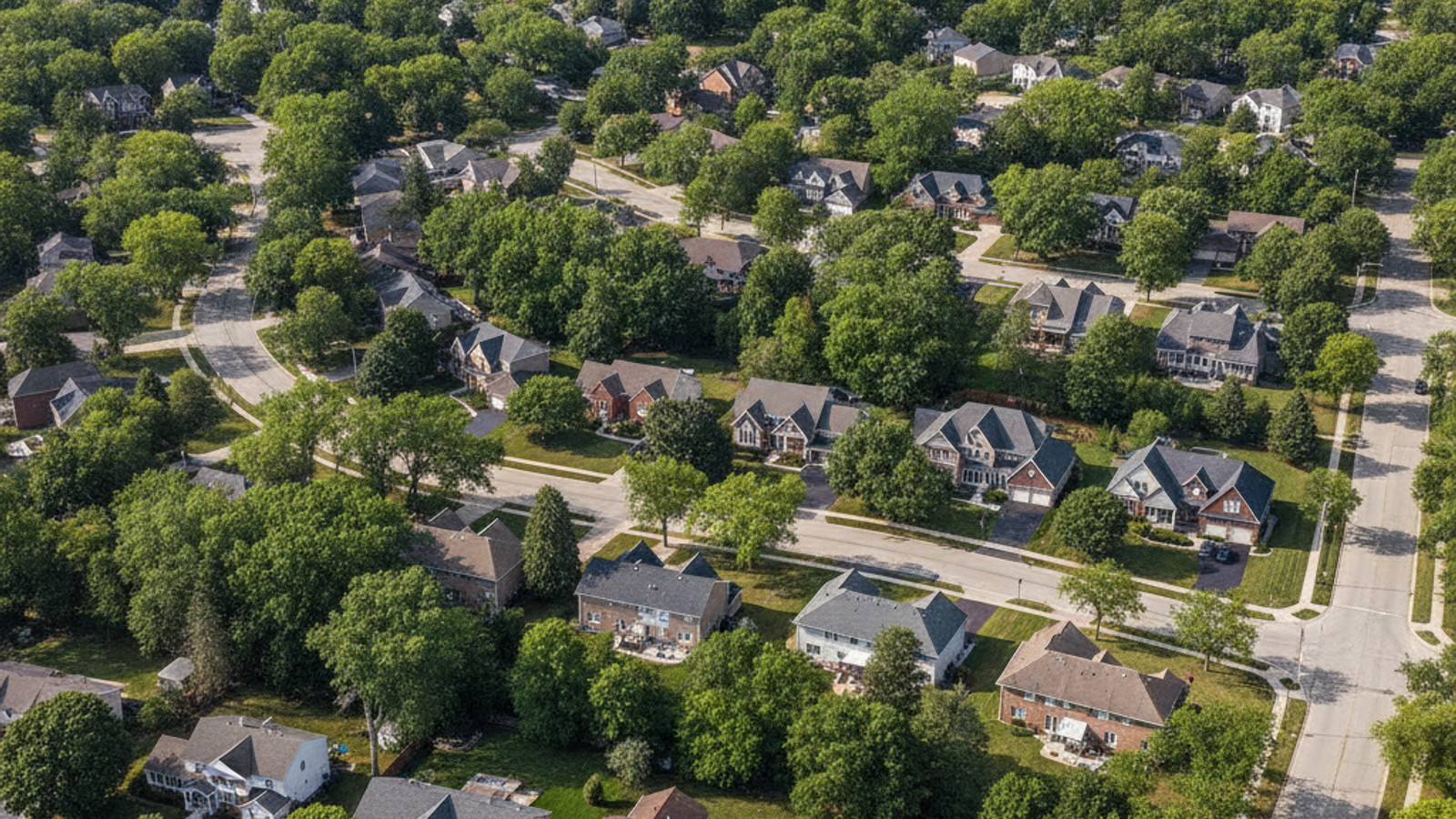
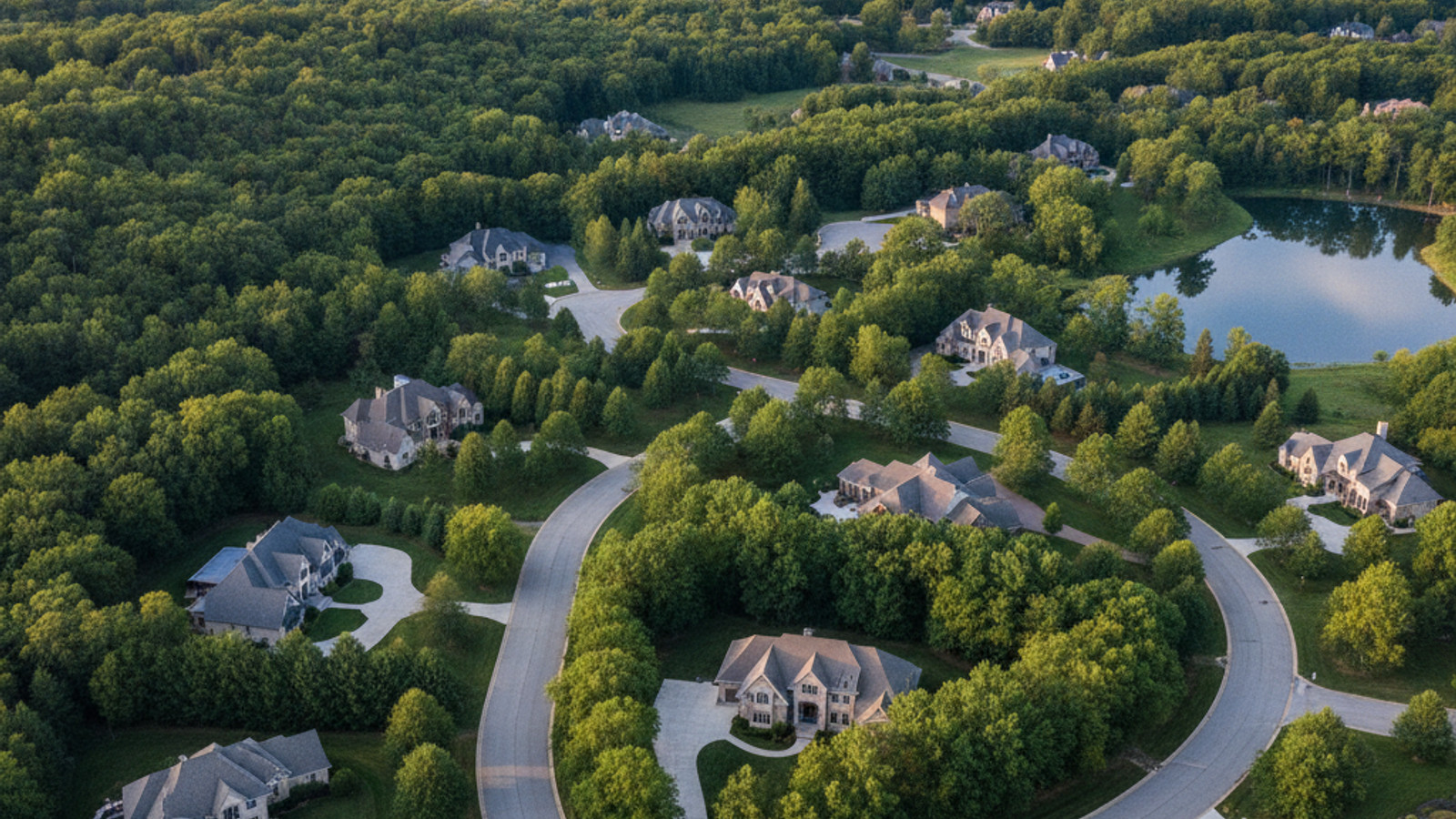
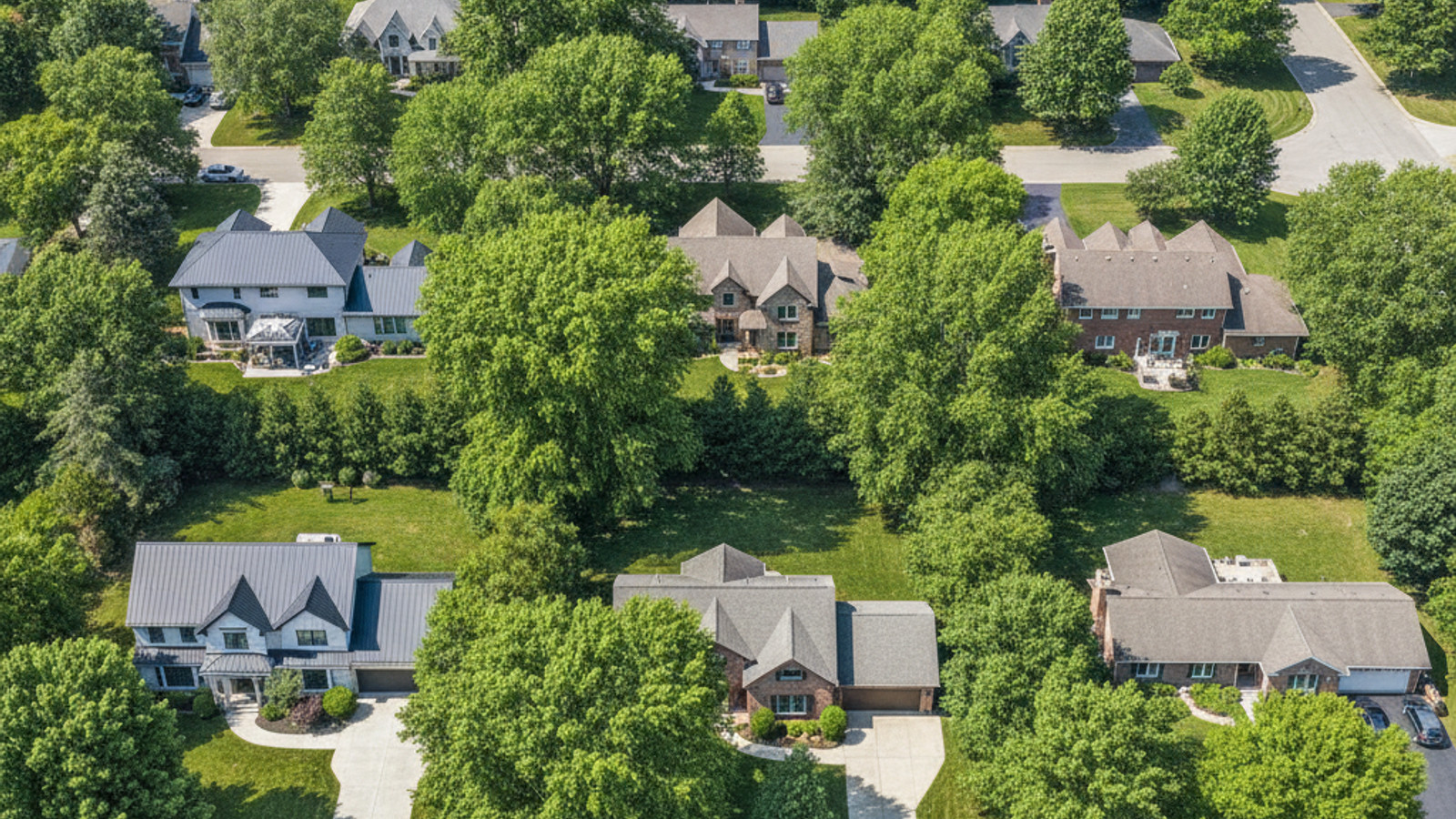
The trade-off here is density versus space. If you are moving from a standard subdivision in Troy or Rochester Hills, the lot sizes here will feel massive. We are talking about 1 to 5+ acres as the norm, not the exception. The township has also secured over 1,500 acres of parkland to ensure that even as new custom homes go up, the green canopy remains.
Oakland Township Real Estate & Housing Market (2026)
Let’s be clear about the financials: this is a luxury-dominated market. Because zoning requires large lots, you rarely find the entry-level housing stock that exists in neighboring towns. The inventory in early 2026 remains tight, specifically for turnkey luxury estates, as few homeowners are looking to sell their slice of privacy.
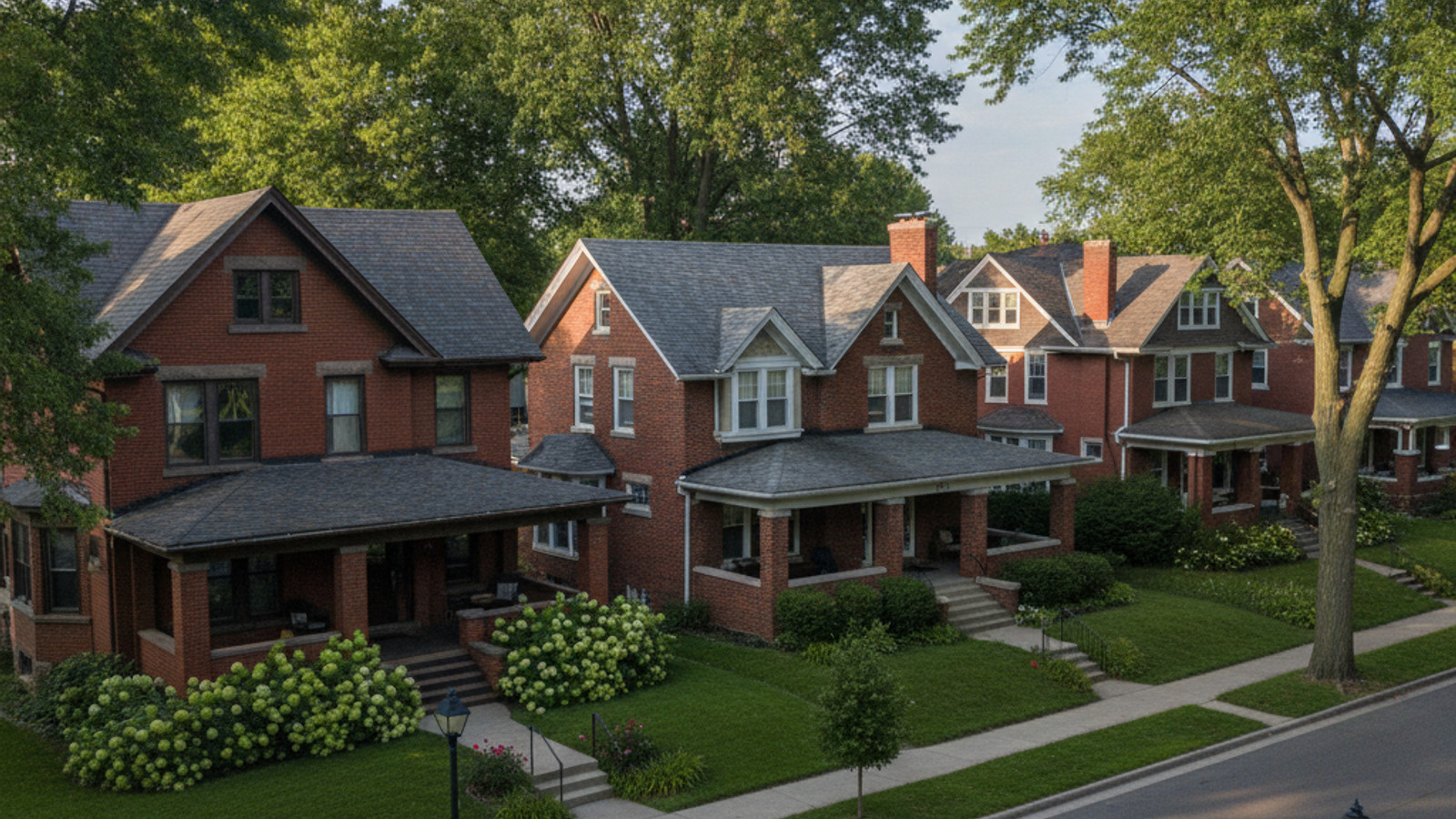
Most homes here fall into the “custom estate” category. You will see sweeping brick colonials, expansive Cape Cods, and sprawling architectural ranch homes. Unlike the cookie-cutter developments further south, almost every home here has a unique footprint.
If you are looking to buy, here is a general idea of the numbers you will encounter:
- Entry Level: It is increasingly difficult to find single-family homes under $550,000. Anything in this range usually requires significant updates or sits on a less desirable lot.
- The Sweet Spot: The median sold price generally hovers in the $750,000 – $850,000 range. This gets you a substantial home on a nice piece of land.
- Luxury Tier: A significant portion of the market sits above $1,500,000, with ultra-luxury estates pushing well past $2,500,000.
Neighborhoods & Residential Pockets
While the township is known for rural sprawl, there are distinct ways to live here depending on how much neighborhood structure you want.
- Golf Course Communities: If you want the prestige of Oakland Township but prefer manicured lawns and paved streets, communities like The Wyndgate or Westwynd are the go-to options. These areas offer a gated or semi-gated feel with high homeowner association standards. You get the luxury address, but you are living closer to your neighbors than you would on a standalone farm.
- Estate Developments: There is a corridor often locally referred to as the “Billion Dollar Mile” near Silverbell Road, along with other high-end subdivisions. These are neighborhoods where the homes are massive, but they are part of a cohesive development. It’s a popular middle ground for buyers considering exclusive communities in Oakland County who want land but don’t want to be isolated.
- Standalone Acreage: For maximum privacy, many buyers look for homes that aren’t in a subdivision at all. These properties have no HOA restrictions, meaning you can build that pole barn or park your boat without asking a committee for permission.
- North vs. South: There is also a geographic split. The southern tip of the township feels much closer to living in nearby Rochester Hills—it’s quicker to get to the grocery store and highways. As you head north toward the Lapeer County border, the vibe shifts to true horse country, feeling more like Metamora.
Cost of Living: Taxes, Utilities, and Maintenance
When calculating your monthly budget, you have to look beyond the mortgage principal and interest. The infrastructure here creates a different cost of living profile than a standard suburb.
Let’s talk about taxes. The actual millage rate in Oakland Township is often lower than in cities like Rochester or Rochester Hills because there are fewer municipal services (no city police force, for example—patrols are contracted through the Sheriff’s office). However, because property values are so high, your actual tax bill will still be substantial.
- Utilities: The Well and Septic Factor — A massive factor for newcomers is water and sewer. While some subdivisions are connected to city water, many homes rely on private wells and septic systems.
- The Benefit: You don’t have a monthly water bill.
- The Cost: You are responsible for your own infrastructure. You need to budget for water softeners (the iron content can be high), salt delivery, and septic tank pumping every few years. If a septic field fails, a replacement can cost $20,000 – $40,000.
- The “Dirt Road Tax”: If you live on or have to commute via the gravel roads, your vehicle maintenance costs will go up. Residents joke about it, but it’s real. You will be buying more car washes, replacing air filters more often, and likely dealing with suspension wear sooner than your city-dwelling friends.
Schools and Education
It is important to know that there is no “Oakland Township School District.” Your address determines which neighboring district your children will attend, and this can drive property values significantly.
- Rochester Community Schools: This district covers the majority of the township. The reputation of Rochester schools is a primary driver for people moving to the area. It offers a robust curriculum and extensive AP and extracurricular options.
- Lake Orion Community Schools: The northern and northwestern portions of the township usually feed into Lake Orion schools. This is also a very strong district. Often, you can find slightly better value on home prices in the Lake Orion slice of the township compared to the Rochester slice, simply due to market demand.
- Romeo Community Schools: A smaller section along the eastern border is served by Romeo schools.
Regardless of the district, families here also have easy access to prestigious private academies located nearby in Rochester Hills and Auburn Hills.
Pros and Cons of Living in Oakland Township
If you are on the fence, here is a realistic look at the lifestyle trade-offs.
The Pros
- Privacy: It is one of the few places to get true estate-style living within commuting distance of automotive HQs.
- Nature: The landscape is beautiful. Rolling terrain, heavy woods, and night skies that are actually dark enough to see stars.
- Prestige: The address carries weight in the local real estate market.
The Cons
- The Commute: You are far from the freeway. It takes time to get anywhere (more on that below).
- The Dust: Those unpaved roads create dust in the summer and mud in the spring. Your car will never stay clean.
- Connectivity: Cell service can be spotty in the deeper hollows and valleys of the township.
Parks, Recreation, and Outdoor Life
Since there is no commercial entertainment district, recreation here focuses on the outdoors. The crown jewel is the Paint Creek Trail. This rail-trail runs right through the township, connecting you south to downtown Rochester and north to Lake Orion. It’s a haven for runners, cyclists, and trout fishermen accessing the creek.
Just to the east lies Stony Creek Metropark, which offers a massive lake for boating, beaches, a golf course, and miles of paved trails. Within the township borders, parks like Cranberry Lake Park offer a historic farm feel, while Lost Lake Nature Park is a favorite for sledding in the winter and quiet nature walks in the summer.
This is also an equestrian country. Many zoning ordinances here are horse-friendly, and you will frequently see riders on the trails or trailers moving down the gravel roads.
Commuting and Location Logistics
If you work remotely, this section matters less, but for daily commuters, you need to manage your expectations. We often call it the “drive to the drive.”
Because there are no freeways cutting through the township, it takes about 15 to 20 minutes just to reach I-75 or M-59. Residents rely heavily on main arteries like Rochester Road, Adams Road, and M-24 (Lapeer Road).
If you work at the tech centers or Stellantis in Auburn Hills, the commute is manageable—likely 20 to 30 minutes. If you are commuting to downtown Detroit, however, you are looking at a 45 to 60-minute haul each way, depending on weather and traffic.
Frequently Asked Questions
Is Oakland Township different from Oakland County?
Yes. Oakland County is the large region north of Detroit containing many cities and townships. Oakland Township is a specific municipality within Oakland County, located north of Rochester Hills.
Does Oakland Township have city water?
It depends on the specific neighborhood. Some newer subdivisions and golf communities are connected to municipal water, but a large number of homes—especially those on larger acreage—rely on private wells and septic systems.
Why are the roads in Oakland Township unpaved?
The township has maintained unpaved roads as a deliberate preservation strategy. The gravel roads naturally limit traffic volume and speed, helping to maintain the rural, quiet atmosphere that residents value.
What schools do Oakland Township residents attend?
There is no single school district for the township. Depending on your address, residents are served by Rochester Community Schools, Lake Orion Community Schools, or Romeo Community Schools. You should always verify the specific district for a home before buying.