If you drive 30 miles north of Detroit along I-75, you’ll hit a city that feels less like a sleepy bedroom community and more like a high-energy engine. Auburn Hills is a dynamic suburb defined by two massive landmarks: the Stellantis North America Headquarters and Oakland University.
But for those of us looking at the local real estate market in 2026, Auburn Hills offers something that is becoming harder to find in Oakland County: a balance of attainable housing and high-end access. It has a distinct vibe—a mix of corporate polish, industrial strength, and quiet residential pockets.
Who actually lives here? It’s a diverse mix. You have young professionals working in the tech corridor, students and faculty attached to the university, and long-term residents who appreciate that they can get to just about anywhere in Metro Detroit in under 45 minutes. If you are weighing your options between the higher price tags of living in nearby Rochester Hills or the bustle of Troy, Auburn Hills is a contender you need to look at closely.
Pros and Cons of Living in Auburn Hills
Every city has its trade-offs, and because Auburn Hills is such a commercial hub, the living experience is different than in a standard subdivision-heavy town.
The Pros:
- Central Location: You are sitting at the intersection of I-75 and M-59. It is arguably the most convenient transit point in the northern suburbs.
- Bang for Your Buck: Housing costs are generally lower here than in neighboring communities, yet you share many of the same amenities.
- Tax Benefits: Because the city has such a massive corporate tax base, residents do not pay a local city income tax.
- World-Class Amenities: Between the massive outlet mall and the university, you have entertainment options that people drive hours to visit.
The Cons:
- Traffic Volume: Because the daytime population swells with workers and shoppers, rush hour near the interchanges and the mall can be intense.
- School District Confusion: The city is split between three different school districts, which can be tricky for homebuyers to navigate.
- Industrial Pockets: Some residential streets border commercial zones, so you don’t always get that secluded, “tucked away” feeling in every neighborhood.
Cost of Living & Housing Market
Let’s talk numbers. One of the biggest draws for moving to Auburn Hills right now is affordability. While inventory has been tight across the state, this city consistently offers better value per square foot than the county average.
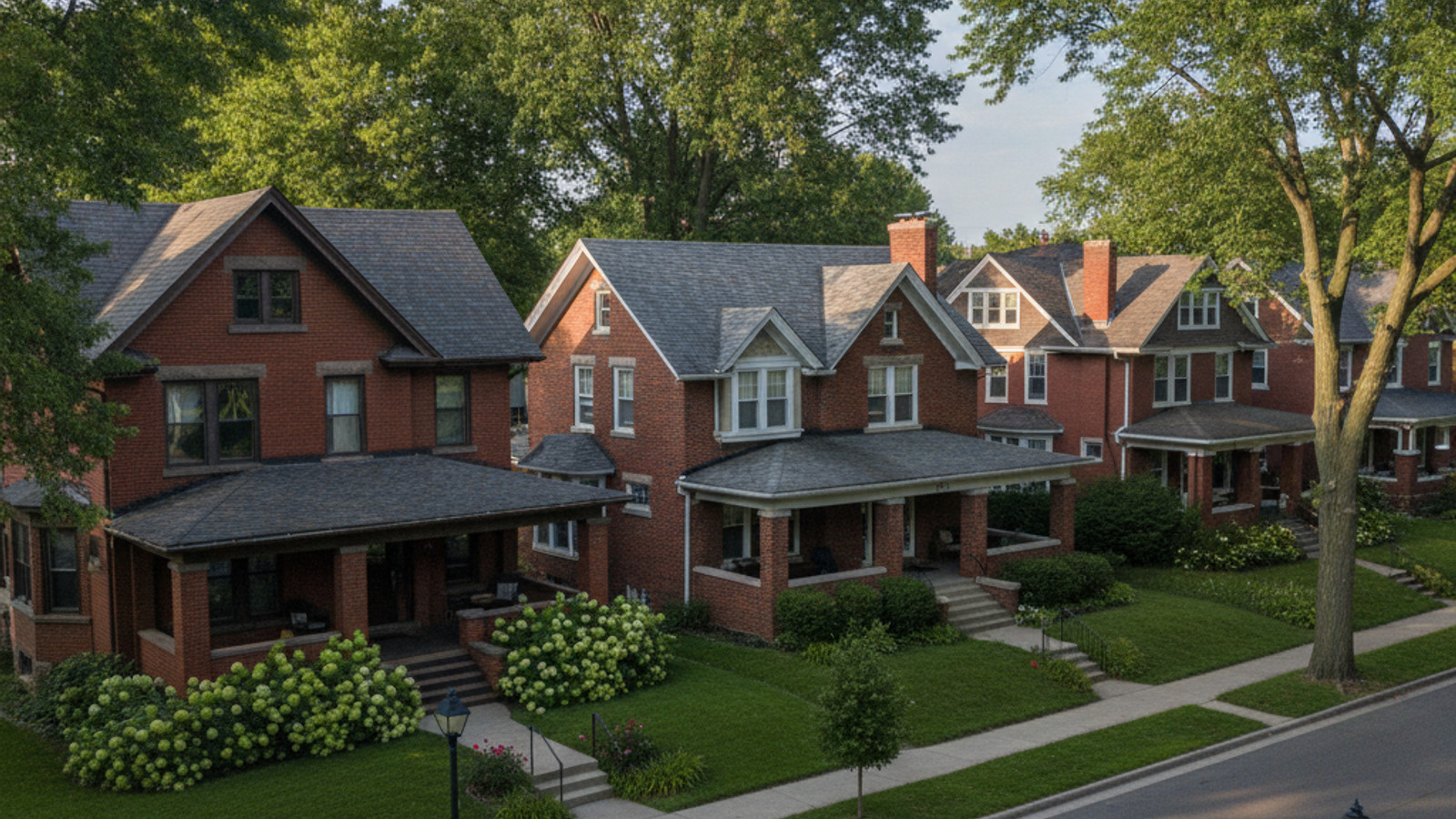
As of early 2026, median home prices are hovering in the $260,000 to $280,000 range. To put that in perspective, you might pay significantly more for a similar-sized home just five minutes east in Rochester. The housing stock here is incredibly varied, ranging from starter bungalows and manufactured homes to sprawling executive estates.
Property taxes are another factor to budget for. While you save on the lack of city income tax, property tax rates (millage) vary depending on which school district your home falls into. You can generally expect a rate between 38 and 50 mills. For a quick math estimate, the effective property tax rate usually lands around 1.24%.
If you aren’t ready to buy, the rental market is robust. You can find budget-friendly apartments suitable for students, or high-end luxury townhomes with attached garages that rival the cost of a mortgage.
Best Neighborhoods & Housing Options
Because Auburn Hills grew around industry and education, it doesn’t have a single “center” of housing. Instead, it has distinct pockets that appeal to different lifestyles.
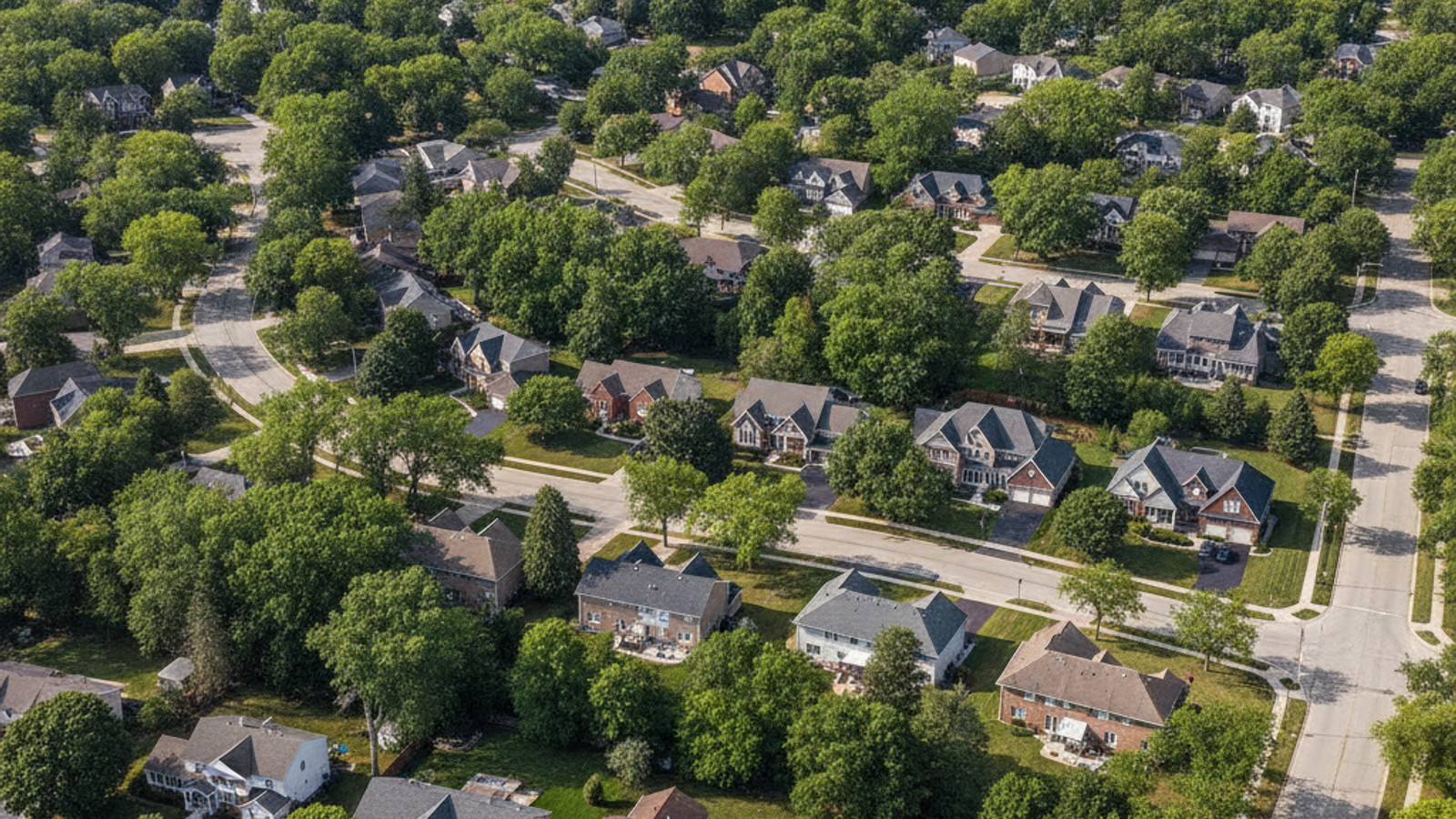
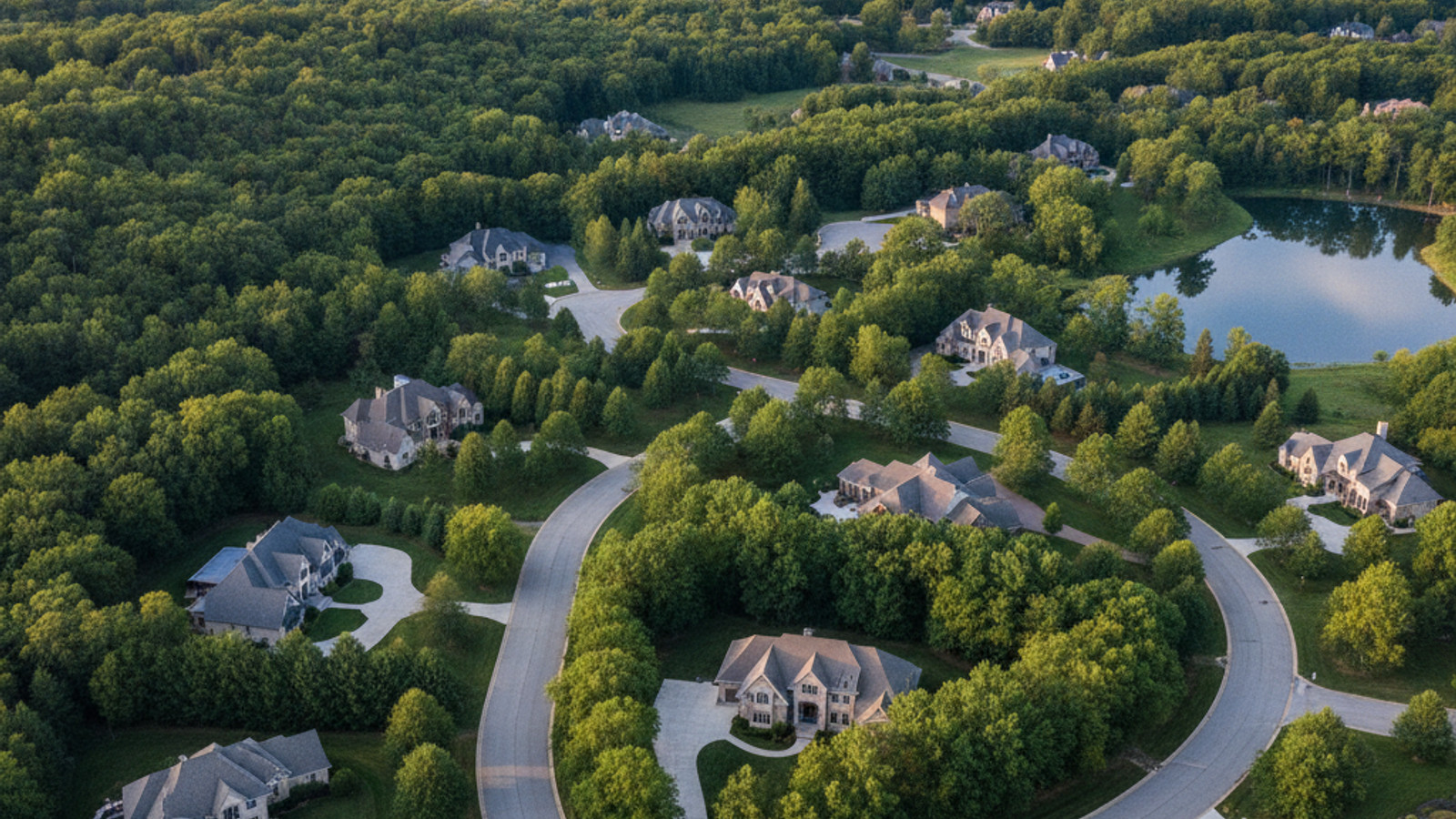
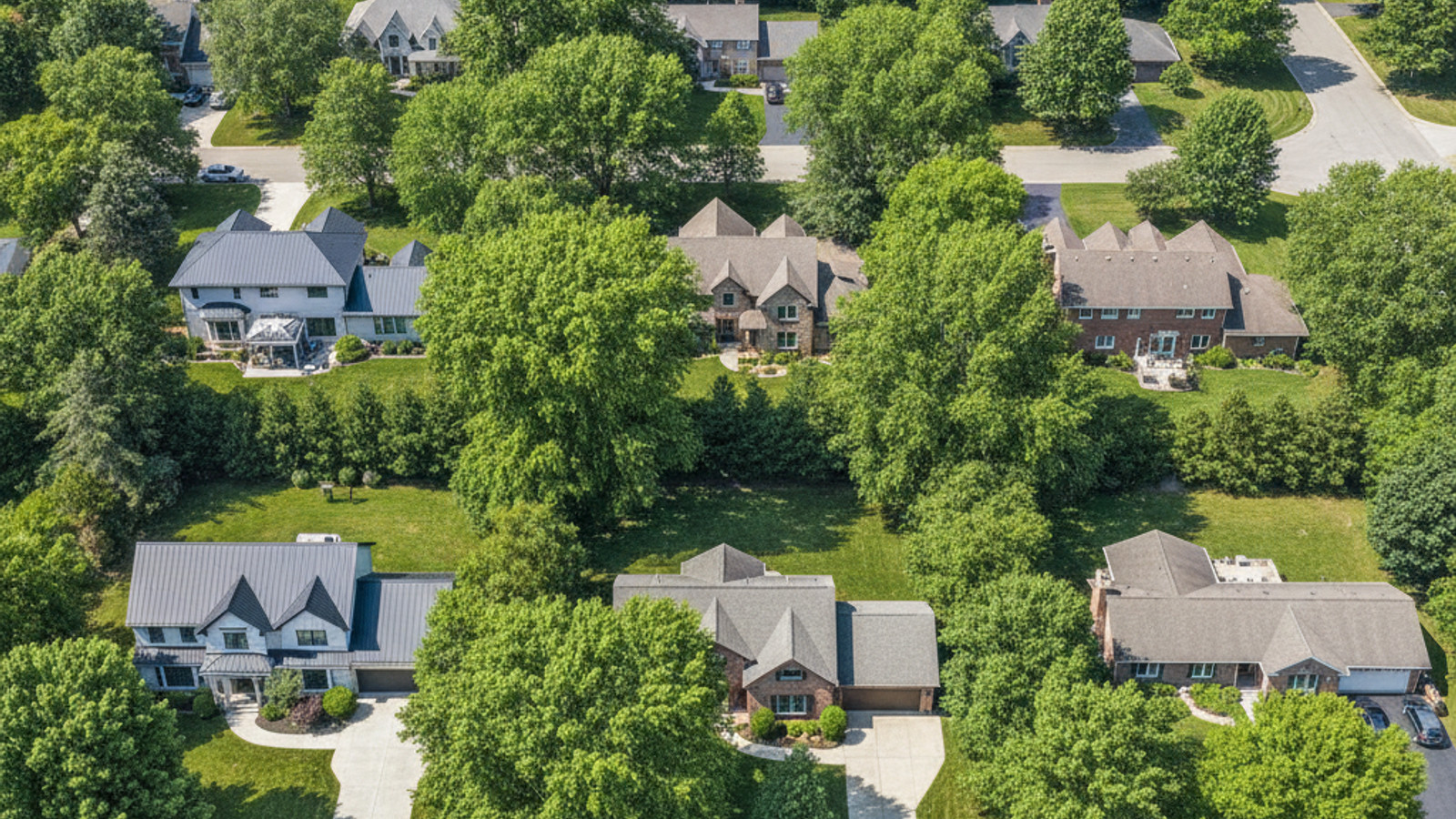
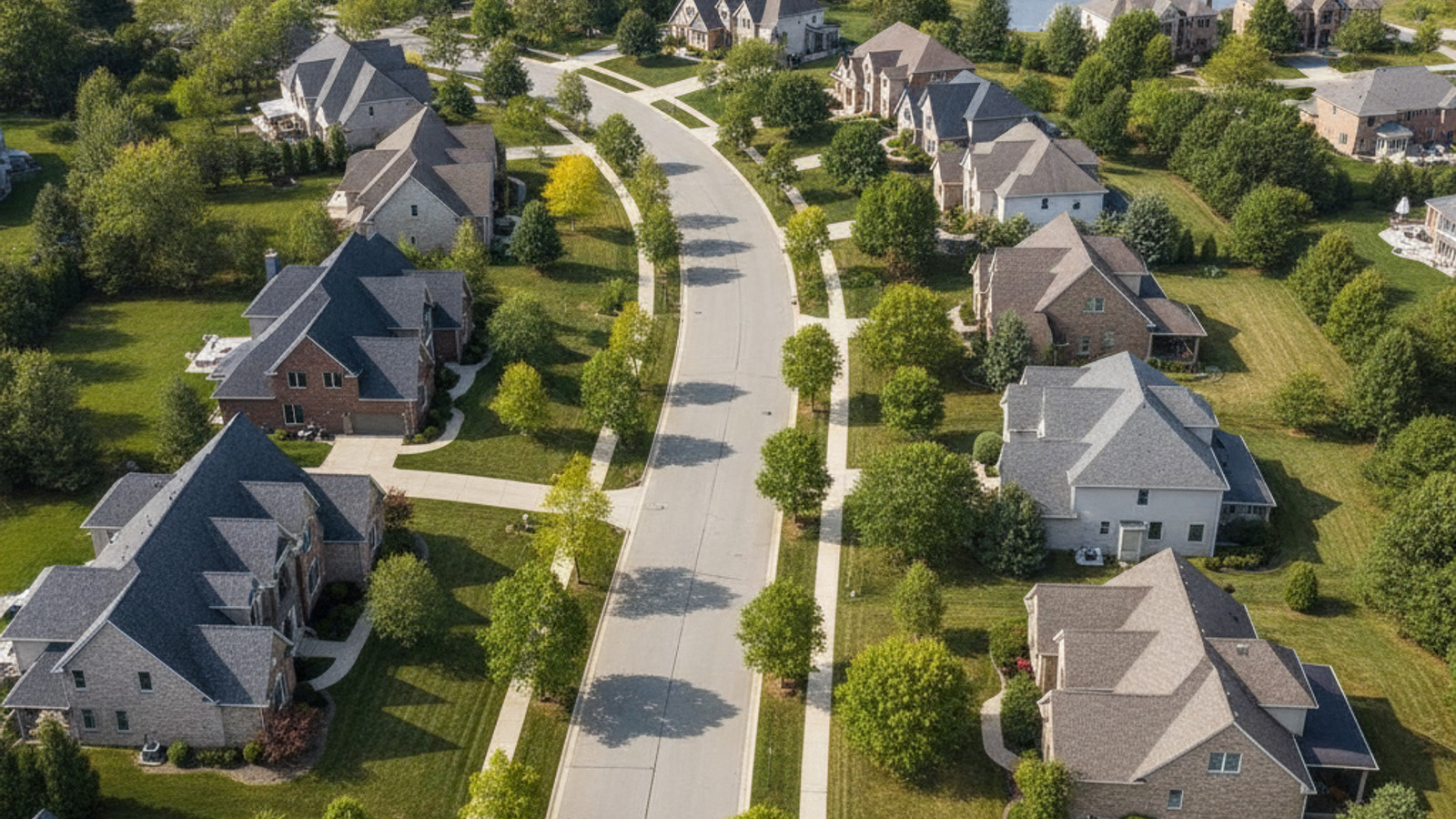
The Northeast Corner: If you are looking for a more traditional suburban feel with larger lots and mature trees, look toward the northeast section of the city. This area tends to be quieter, bordering the golf courses and larger parks. The price point here is often higher, but you get more privacy.
Downtown & Riverside: The city has invested heavily in revitalizing its downtown area. We are seeing newer developments like The Residences at Parkways and modern condos that appeal to buyers who want to walk to a coffee shop or a riverside park. This area has a more urban, connected energy.
55+ Communities: Auburn Hills is a surprisingly popular destination for retirees. Gated communities like Heritage in the Hills offer extensive amenities (clubhouses, pools) and maintenance-free living. The Reserves of Auburn Hills is another spot often on the radar for empty nesters downsizing from larger family homes.
University District: Naturally, the areas surrounding Oakland University have a higher density of apartments and student-focused housing. However, there are also quiet streets nearby where faculty and staff live, offering a very short commute to campus.
Job Market & Major Employers
It is impossible to talk about this city without mentioning the elephant in the room—or rather, the skyscraper. Stellantis (formerly Chrysler) anchors the local economy. Their massive headquarters and tech center employ thousands and serve as the city’s economic engine.
But it’s not just one company. Auburn Hills is located along a high-tech corridor that hosts over 40 international corporations. Major suppliers like BorgWarner, Forvia (Faurecia), and Joyson Safety Systems have a significant footprint here.
Oakland University is also a major employer, driving demand for educators, administrators, and support staff. For residents, this means the commute is often negligible—many people live here specifically to work here. If you do work elsewhere, the proximity to the highways makes commuting to Troy or even downtown Detroit relatively painless.
Schools & Education Districts
This is the most critical part for homebuyers with children to understand: Auburn Hills does not have its own standalone school district. The city is sliced into three different zones, and where you buy determines where your kids go.
Avondale School District: This district covers a large portion of the city. Avondale has gained attention for its GATE program (Gifted and Talented Education), which is a magnet school option that consistently ranks well. It’s a diverse district with strong community support.
Rochester Community Schools: Specific pockets in the northern and eastern parts of the city fall into the Rochester district. Homes in these boundaries often command a premium price because of the district’s reputation.
Pontiac School District: Some western sections of the city are served by Pontiac schools. It is vital to check the specific address of any home you are interested in to confirm the district, as boundaries can sometimes split neighborhoods.
Beyond K-12, Oakland University provides a huge benefit to the community. Residents can often access library resources, attend cultural events, and enjoy Division I sports right in their backyard.
Shopping, Dining & Entertainment
If you like to be where the action is, this is the place. Auburn Hills draws visitors from all over Michigan, primarily due to Great Lakes Crossing Outlets. This isn’t just a mall; it’s an entertainment complex. It houses the SEA LIFE Michigan Aquarium, the LEGOLAND Discovery Center, and a massive Round1 arcade.
For social outings, the city has become a hub for “activity-based” entertainment. You have Topgolf for driving range games and The HUB Stadium, which features football bowling (fowling). These spots are packed on weekends.
If you prefer a quieter scene, Downtown Auburn Hills offers a different pace. It’s smaller than downtown Rochester or Royal Oak, but it has a cozy, local feel. You can grab a drink at the Den or check out newer spots like Alo’s Sports Bar. The dining scene varies wildly, from the upscale Italian staple Lelli’s on Opdyke to every fast-casual chain imaginable near the mall.
Parks & Outdoor Recreation
Despite its reputation as an industrial hub, the city has done a great job preserving green space. The Clinton River Trail runs right through town, providing a gravel path for runners and cyclists that connects you all the way to Rochester and Pontiac.
Riverside Park is the gem of the downtown area. In the summer, the splash pad is a hit, and the river access allows for kayaking. For golfers, Fieldstone Golf Club is a municipally-owned course that plays like a high-end private club. It is consistently rated as one of the best public courses in Metro Detroit.
Safety & Crime: What Data Shows
When you look at safety statistics for Auburn Hills, you have to read between the lines. You might see data showing a property crime rate higher than the national average (around 44 per 1,000 residents). However, it is crucial to understand that these numbers are heavily skewed by retail theft at the outlet mall. Shoplifting incidents at a major regional mall get logged as property crimes in the city, inflating the stats.
In contrast, violent crime rates are generally lower than the national average (approx. 1.8 per 1,000). Most residential neighborhoods—especially in the northeast and the gated communities—are quiet and safe. Because of the strong corporate tax base, the Auburn Hills Police Department is well-funded and highly responsive.
Commuting & Transportation
Auburn Hills is built for the car. The city is designed around the intersection of I-75 (running North/South) and M-59 (running East/West). This gives you incredible access to the rest of the region. You are about 35 to 45 minutes from downtown Detroit and just 15 minutes from the business district in Troy.
The downside of this access is the traffic. The I-75/M-59 interchange is notorious for congestion, and surface streets near Great Lakes Crossing can gridlock during holiday shopping seasons or rush hour. While there is some SMART bus service, the routes are limited. This is very much a car-dependent city.
FAQ: Living in Auburn Hills
Is Auburn Hills expensive to live in?
Compared to the overall cost of living in Michigan, Auburn Hills is quite reasonable. It is generally more affordable than neighbors like Rochester Hills or Troy, offering lower median home prices while providing access to the same regional amenities.
What school district is Auburn Hills in?
The city is served by three different districts: Avondale, Rochester, and Pontiac. Most residents fall into Avondale, but it is essential to verify the school district for any specific property before buying, as boundaries can be complex.
Does Auburn Hills have a downtown?
Yes, there is a revitalized downtown area along Auburn Road near Squirrel Road. While it is smaller than other local downtowns, it features walkable sidewalks, Riverside Park, local bars, and restaurants, offering a distinct community feel separate from the mall area.
Is Auburn Hills safe?
Yes, the residential areas are generally very safe. While property crime statistics may appear high, they are disproportionately driven by retail theft at the Great Lakes Crossing Outlets rather than residential break-ins or violent crime.